

The gold market is a complex and multifaceted arena that has captivated investors for centuries. Gold has been revered not only as a precious metal but also as a symbol of wealth and stability. Its intrinsic value is derived from its rarity, durability, and the cultural significance it holds across various societies.
The gold market operates on a global scale, influenced by a myriad of factors including economic indicators, geopolitical tensions, and shifts in investor sentiment. Understanding the dynamics of this market requires a grasp of both historical context and current trends. In recent years, the gold market has experienced significant fluctuations, driven by factors such as inflation rates, currency strength, and interest rates.
For instance, during periods of economic uncertainty or inflationary pressures, gold often serves as a safe haven for investors seeking to preserve their wealth. The demand for gold can also be influenced by central banks, which may buy or sell gold reserves to stabilize their currencies or manage inflation. Additionally, the rise of digital currencies and alternative investments has introduced new variables into the gold market, prompting investors to reassess their strategies regarding this traditional asset.
When considering an investment in gold, one must weigh the merits of long-term versus short-term strategies. Long-term investment in gold typically involves holding the asset for several years or even decades, capitalizing on its historical tendency to appreciate over time. This approach is often favored by those who view gold as a hedge against inflation and currency devaluation.
For example, during the 1970s, gold prices surged dramatically as inflation rates soared, demonstrating its potential as a long-term store of value. Conversely, short-term investment in gold can be more speculative in nature, focusing on price fluctuations over shorter time frames. Traders may engage in buying and selling gold based on technical analysis or market sentiment, aiming to profit from rapid price movements.
This strategy requires a keen understanding of market trends and often involves higher risks due to the volatility inherent in the gold market. For instance, during times of geopolitical unrest, gold prices may spike suddenly, presenting opportunities for short-term traders to capitalize on these movements.
Investors interested in gold have two primary avenues: purchasing physical gold or investing in gold exchange-traded funds (ETFs). Physical gold includes tangible assets such as coins, bars, and jewelry. Owning physical gold provides a sense of security and direct ownership; however, it also comes with challenges such as storage, insurance, and liquidity concerns.
For example, an investor who buys gold bullion must consider how to securely store it and protect it from theft or damage. On the other hand, gold ETFs offer a more convenient way to invest in gold without the need for physical storage. These funds track the price of gold and are traded on stock exchanges like regular shares.
Gold ETFs provide liquidity and ease of access, allowing investors to buy or sell shares quickly. However, they may not provide the same level of security as owning physical gold since they are subject to market fluctuations and management fees. Investors must carefully evaluate their preferences and risk tolerance when deciding between these two options.
Key Takeaways
- Gold is a popular investment due to its historical value and as a hedge against inflation and economic uncertainty.
- Long-term investment in gold can provide stability and protection against market volatility, while short-term investment can be more speculative and risky.
- Physical gold offers tangible ownership and can be a hedge against currency devaluation, while gold ETFs provide liquidity and ease of trading.
- Diversifying a portfolio with gold can help reduce overall risk and provide a store of value during economic downturns.
- Investing in gold mining companies can offer leverage to the price of gold and potential for growth, but also comes with operational and geopolitical risks.
Diversifying Your Portfolio with Gold
Incorporating gold into an investment portfolio can serve as an effective diversification strategy. Gold often exhibits a low correlation with other asset classes such as stocks and bonds, meaning that its price movements do not necessarily align with those of traditional investments. This characteristic can help mitigate risk during market downturns.
For instance, during the 2008 financial crisis, while stock markets plummeted, gold prices surged as investors flocked to safe-haven assets. Moreover, diversification through gold can enhance overall portfolio performance by providing a buffer against volatility. Investors may allocate a certain percentage of their portfolio to gold based on their risk tolerance and investment goals.
A common recommendation is to hold between 5% to 10% of one’s portfolio in gold to achieve a balanced approach. This allocation can help stabilize returns over time while still allowing for growth potential through other investments.
Investing in Gold Mining Companies
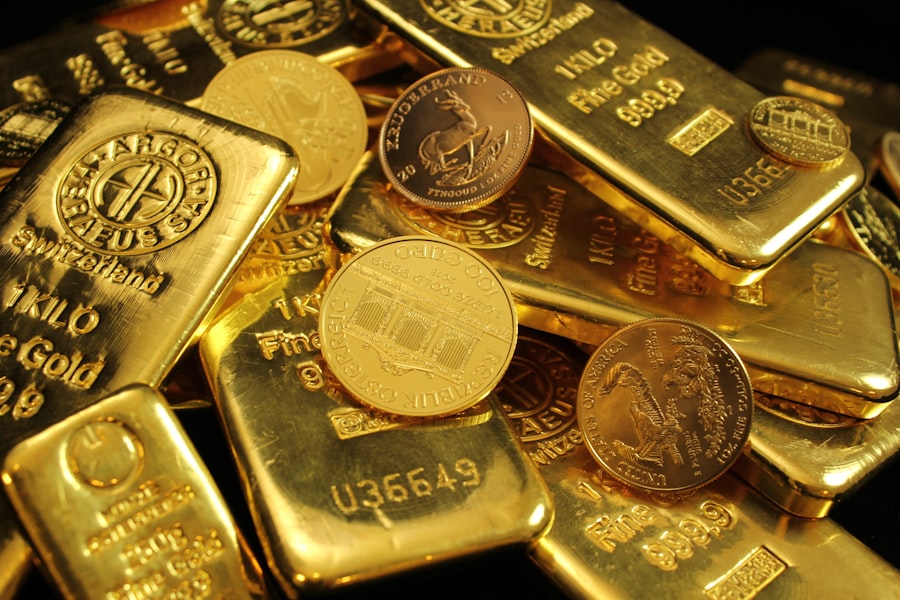
Another avenue for gaining exposure to gold is through investing in gold mining companies. These companies are involved in the exploration, extraction, and production of gold, making them directly tied to the performance of the metal itself. Investing in mining stocks can offer leveraged exposure to gold prices; when gold prices rise, mining companies often see their profits increase significantly due to lower production costs relative to selling prices.
However, investing in mining companies comes with its own set of risks. Factors such as operational challenges, regulatory changes, and geopolitical issues can impact a mining company’s performance independently of gold prices. For example, a mining company operating in a politically unstable region may face disruptions that affect its output and profitability.
Therefore, investors should conduct thorough research on individual mining companies, assessing their financial health, management team, and operational efficiency before making investment decisions.
The Role of Gold in a Financial Crisis
| Financial Crisis | Role of Gold |
|---|---|
| Stock Market Crash | Gold is considered a safe-haven asset and tends to retain its value during stock market crashes. |
| Inflation | Gold is often used as a hedge against inflation, as its value tends to rise when the purchasing power of the currency falls. |
| Currency Devaluation | Gold can act as a store of value when a country’s currency is devalued, as it is not tied to any specific currency. |
| Banking Crisis | Investors may turn to gold as a safe asset during banking crises, as it is not dependent on the stability of financial institutions. |
safe-haven during the 2008 financial crisis
During the 2008 financial crisis, gold prices reached record highs as investors sought refuge from plummeting stock markets and collapsing banks. This surge in demand underscored gold’s ability to act as a hedge against economic turmoil.
a currency alternative during economic crises
In addition to serving as a hedge, gold can also function as a currency alternative during crises. When fiat currencies face devaluation pressures or lose value, gold becomes an attractive option for those seeking to preserve their wealth. This is particularly evident in countries experiencing hyperinflation or severe economic distress, where citizens often turn to physical gold as a store of value.
gold’s enduring appeal in uncertain times
The appeal of gold as a financial safeguard has endured through the ages. Its ability to provide a sense of security during uncertain times has made it a popular choice for investors seeking to mitigate potential losses.
Factors Affecting the Price of Gold
The price of gold is influenced by a multitude of factors that can create both upward and downward pressure on its value. One significant factor is inflation; as inflation rises, the purchasing power of fiat currencies declines, leading investors to seek out tangible assets like gold that can retain value over time. Central bank policies also play a critical role; for instance, when central banks lower interest rates or engage in quantitative easing, it can lead to increased demand for gold as an alternative investment.
Geopolitical events are another key driver of gold prices. Tensions arising from conflicts or political instability can lead to heightened uncertainty in financial markets, prompting investors to flock to safe-haven assets like gold. Additionally, fluctuations in currency values—particularly the U.S.
dollar—can impact gold prices inversely; when the dollar weakens against other currencies, gold becomes cheaper for foreign investors, potentially boosting demand.
Tax Implications of Investing in Gold
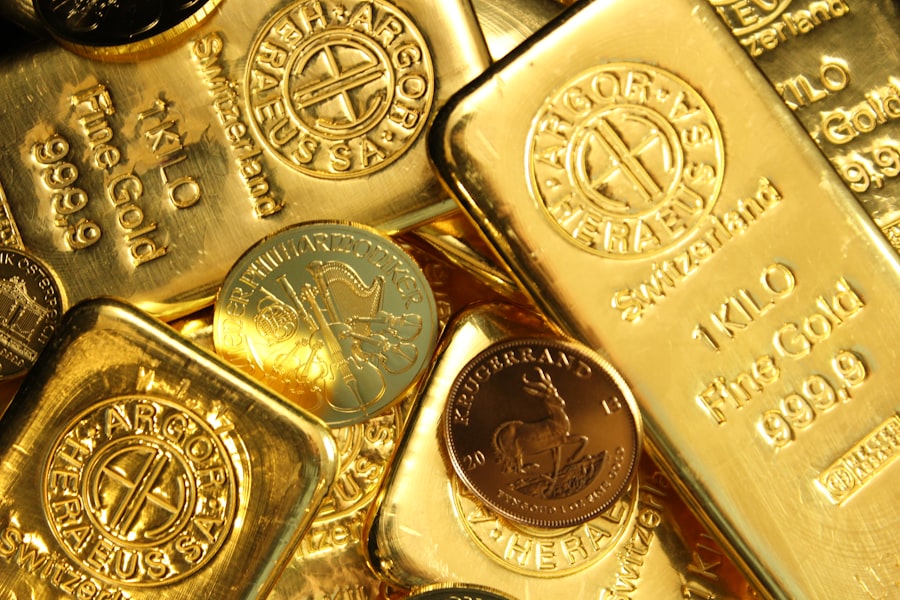
Investing in gold carries specific tax implications that investors must consider when making decisions about their portfolios. In many jurisdictions, physical gold is classified as a collectible asset rather than a standard commodity. This classification can result in higher capital gains tax rates upon sale compared to other investments like stocks or bonds.
For example, in the United States, collectibles are typically taxed at a maximum rate of 28%, which is significantly higher than the long-term capital gains tax rate for most other assets. Furthermore, investors should be aware of reporting requirements associated with buying and selling physical gold or precious metals. Transactions above certain thresholds may require disclosure to tax authorities to ensure compliance with regulations aimed at preventing money laundering and tax evasion.
Understanding these tax implications is crucial for investors looking to optimize their returns while remaining compliant with tax laws governing their investments in gold.
If you are interested in exploring other valuable items to invest in, you may want to check out this article on luxury watch trading at Allen Gold & Silver Exchange. This one-stop shop in Allen, TX offers a wide range of services for buying, selling, and trading luxury watches, providing valuable insights into the world of high-end timepieces.



 Tiếng Việt
 English
 Español
 Español de Colombia
 Español de México
 简体中文
 Tagalog
 العربية
 Français
 한국어
 Русский
 Português do Brasil
 हिन्दी
 Deutsch
 Polski