

Gold and silver spot prices represent the current market value of these precious metals, reflecting the price at which they can be bought or sold for immediate delivery. The spot price is determined by various factors, including supply and demand dynamics, geopolitical events, and macroeconomic indicators. Unlike futures prices, which are based on contracts for future delivery, spot prices provide a real-time snapshot of the market, making them crucial for investors and traders alike.
The spot price of gold and silver is typically quoted in terms of price per ounce. For instance, if the spot price of gold is $1,800 per ounce, it means that one ounce of gold can be purchased at that price in the market. These prices fluctuate throughout the trading day as they are influenced by trading activity on commodities exchanges such as the New York Mercantile Exchange (NYMEX) and the London Bullion Market Association (LBMA).
Understanding these prices is essential for anyone looking to invest in precious metals, as they serve as a benchmark for buying and selling physical bullion, coins, and other related financial instruments.
Key Takeaways
- Gold and silver spot prices are the current market prices for immediate delivery of gold or silver
- Factors affecting gold and silver spot prices include supply and demand, geopolitical events, and currency movements
- Interpreting gold and silver spot prices involves understanding market trends, price movements, and historical data
- Market demand plays a crucial role in determining gold and silver spot prices, as it reflects the level of interest and investment in these precious metals
- Economic indicators such as inflation, interest rates, and GDP growth can impact gold and silver spot prices, making them important factors to consider for investment decision making
Factors Affecting Gold and Silver Spot Prices
Several key factors influence the spot prices of gold and silver, with market sentiment being one of the most significant. Investor behavior can shift dramatically based on economic news, political stability, and global events. For example, during times of economic uncertainty or geopolitical tensions, investors often flock to gold and silver as safe-haven assets.
This increased demand can drive up spot prices significantly. Conversely, when confidence in the economy is high, demand for these metals may decrease, leading to lower prices. Another critical factor is the relationship between gold and silver prices and the U.S.
dollar. Precious metals are typically inversely correlated with the dollar; when the dollar weakens, gold and silver prices tend to rise as they become cheaper for foreign investors. Conversely, a strong dollar can lead to lower prices for these metals.
Additionally, interest rates play a crucial role in determining spot prices. Lower interest rates reduce the opportunity cost of holding non-yielding assets like gold and silver, making them more attractive to investors. Conversely, higher interest rates can lead to a decline in demand for these metals.
How to Interpret Gold and Silver Spot Prices

Interpreting gold and silver spot prices requires an understanding of market trends and the broader economic context. Spot prices are not static; they fluctuate based on real-time trading activity and external factors. Investors should pay attention to price movements over time to identify patterns that may indicate future trends.
For instance, a consistent upward trend in spot prices could signal increasing demand or declining supply, while a downward trend might suggest the opposite. Moreover, it is essential to consider the context behind price changes. A sudden spike in gold prices might be attributed to geopolitical tensions or economic crises, while a drop could be linked to positive economic data or changes in monetary policy.
Investors should also look at technical indicators such as moving averages or relative strength index (RSI) to gauge market sentiment and potential price reversals. By combining these analytical tools with an understanding of fundamental factors, investors can make more informed decisions regarding their investments in gold and silver.
The Role of Market Demand in Gold and Silver Spot Prices
| Factors | Gold Spot Prices | Silver Spot Prices |
|---|---|---|
| Market Demand | Directly influences | Directly influences |
| Investor Sentiment | Indirectly affects | Indirectly affects |
| Industrial Use | Indirectly affects | Directly influences |
| Central Bank Policies | Indirectly affects | Indirectly affects |
Market demand plays a pivotal role in determining the spot prices of gold and silver. Demand can be categorized into several segments: investment demand, industrial demand, and jewelry demand. Investment demand refers to purchases made by individuals or institutions seeking to hold gold or silver as a store of value or hedge against inflation.
This segment has seen significant growth in recent years, particularly with the rise of exchange-traded funds (ETFs) that allow investors to gain exposure to precious metals without physically holding them. Industrial demand is another critical component, particularly for silver, which has numerous applications in electronics, solar panels, and medical devices. Changes in industrial production levels can significantly impact silver prices.
For example, an increase in manufacturing activity can lead to higher demand for silver, pushing up its spot price. Jewelry demand also influences gold prices; cultural factors and seasonal trends can lead to fluctuations in how much gold is purchased for adornment purposes.
The Impact of Economic Indicators on Gold and Silver Spot Prices
Economic indicators such as inflation rates, employment figures, and GDP growth have a profound impact on gold and silver spot prices. Inflation is particularly significant; as inflation rises, the purchasing power of currency declines, prompting investors to seek refuge in tangible assets like gold and silver. Historically, during periods of high inflation, both metals have seen substantial price increases as they are viewed as hedges against currency devaluation.
Employment figures also play a crucial role in shaping market sentiment. Strong job growth can lead to increased consumer confidence and spending, which may reduce demand for safe-haven assets like gold and silver. Conversely, weak employment data can trigger fears of economic downturns, leading investors back to these precious metals for security.
Additionally, central bank policies regarding interest rates can influence economic indicators; for instance, if a central bank signals an intention to raise rates due to strong economic performance, it may lead to a decrease in gold and silver prices as investors shift their focus toward interest-bearing assets.
Analyzing Historical Trends in Gold and Silver Spot Prices
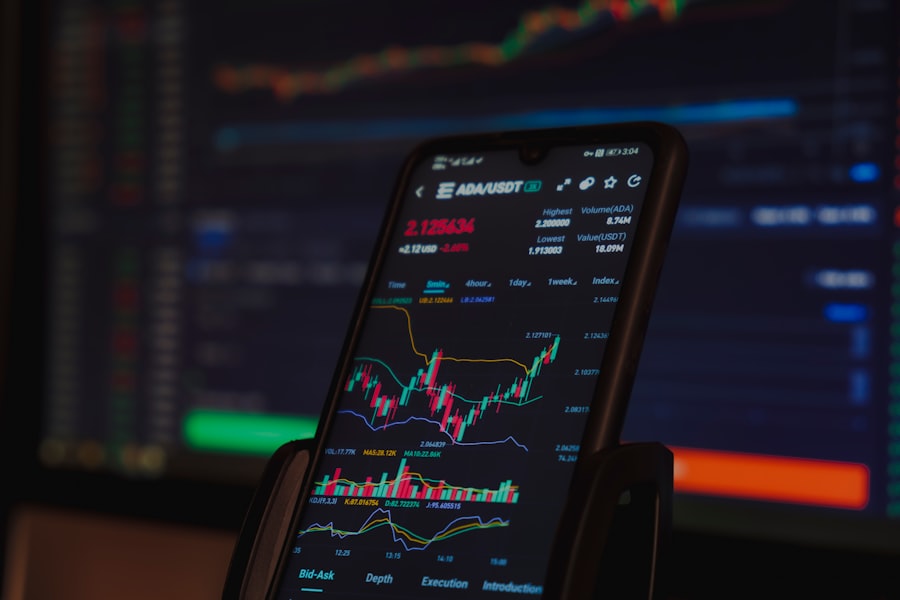
Analyzing historical trends in gold and silver spot prices provides valuable insights into how these markets react to various economic conditions over time. For instance, during the 2008 financial crisis, both gold and silver experienced significant price increases as investors sought safe havens amid widespread uncertainty. Gold reached an all-time high of over $1,900 per ounce in 2011 as fears about sovereign debt crises in Europe escalated.
In contrast, periods of economic stability often correlate with lower spot prices for these metals. For example, during the late 1990s and early 2000s, when the U.S. economy was booming and stock markets were performing well, both gold and silver saw declines in their respective prices.
By examining these historical patterns, investors can better understand potential future movements based on current economic conditions.
The Relationship Between Gold and Silver Spot Prices and Inflation
The relationship between gold and silver spot prices and inflation is complex yet significant. Historically, both metals have been viewed as effective hedges against inflation due to their intrinsic value. When inflation rises, the real value of currency diminishes; thus, investors often turn to gold and silver as a means of preserving wealth.
This behavior tends to drive up demand for these metals during inflationary periods. For example, during the 1970s stagflation—a period characterized by high inflation coupled with stagnant economic growth—gold prices surged dramatically from around $35 per ounce at the beginning of the decade to over $800 by its end. Similarly, silver experienced substantial gains during this time.
In more recent years, concerns about rising inflation due to expansive monetary policies have led many investors to increase their allocations in precious metals as a safeguard against potential currency devaluation.
Using Gold and Silver Spot Prices for Investment Decision Making
Investors looking to make informed decisions regarding gold and silver investments must closely monitor spot prices alongside other market indicators. Understanding when to buy or sell based on price movements can significantly impact overall investment returns. For instance, purchasing gold or silver during periods of low spot prices may yield higher returns if market conditions shift favorably.
Additionally, employing strategies such as dollar-cost averaging—investing a fixed amount at regular intervals—can help mitigate risks associated with price volatility. This approach allows investors to accumulate positions over time without attempting to time the market perfectly. Furthermore, keeping abreast of global economic developments and understanding how they influence supply-demand dynamics will enable investors to make more strategic decisions regarding their investments in gold and silver.
In conclusion, navigating the complexities of gold and silver spot prices requires a multifaceted approach that considers various economic indicators, historical trends, market demand dynamics, and investor sentiment. By developing a comprehensive understanding of these factors, individuals can enhance their investment strategies in precious metals while positioning themselves effectively within this ever-evolving market landscape.
To gain a deeper understanding of the factors influencing the spot price of gold and silver, you may find it helpful to explore related topics such as the market value of jewelry. An insightful article titled Unlocking the Secret to Maximizing Your Jewelry’s Market Value delves into how the intrinsic value of precious metals in jewelry can fluctuate based on market conditions, which directly ties into the broader concepts of gold and silver pricing.



 Português do Brasil
 English
 Español
 Español de Colombia
 Español de México
 简体中文
 Tagalog
 Tiếng Việt
 العربية
 Français
 한국어
 Русский
 हिन्दी
 Deutsch
 Polski