
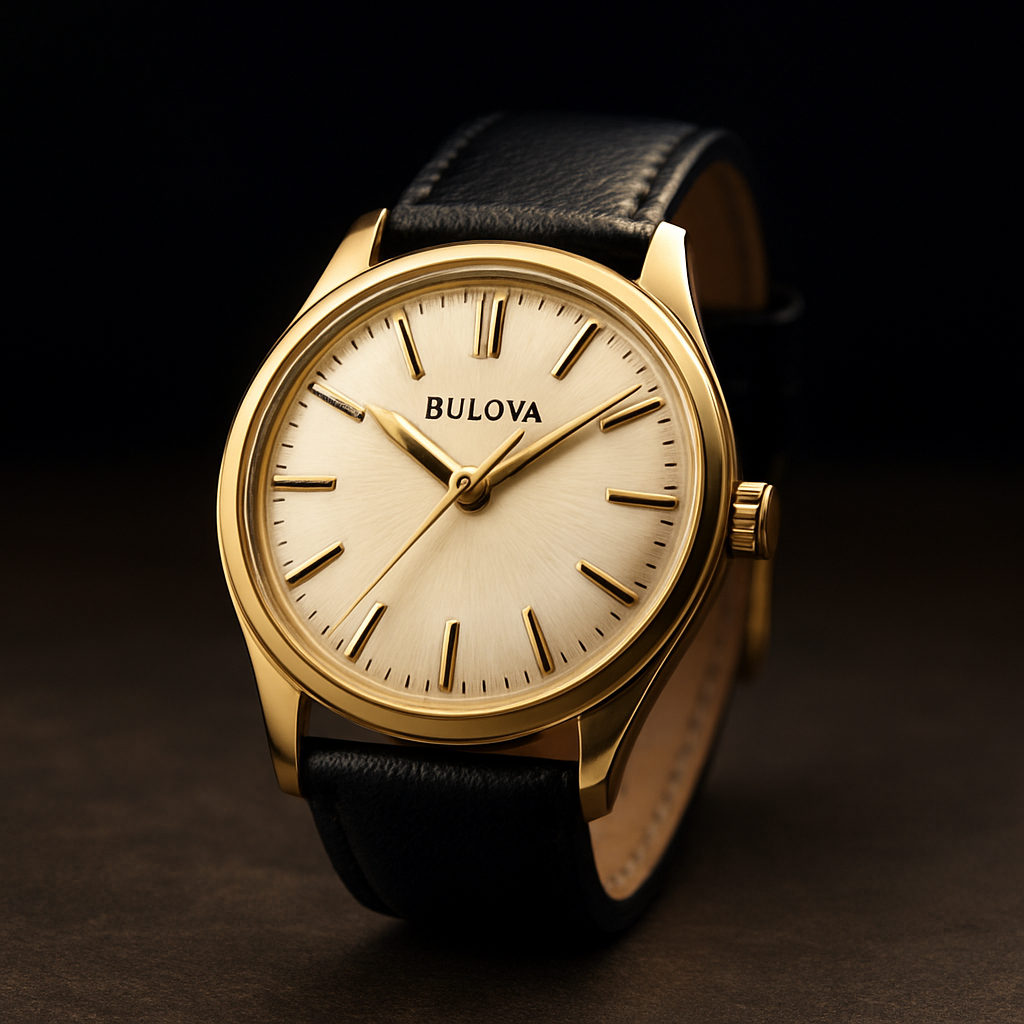
A Bulova watch pairs accessible style with real technical pedigree, yet buyers and sellers routinely get tripped up by model differences, movement types, and authentication. This concise guide explains Bulova history and key technologies like Accutron, Precisionist, and CURV, profiles models and price bands, gives practical checks and service advice, and lays out clear next steps for buying, selling, or servicing your Bulova at Allen Gold and Silver Exchange in Allen, TX.
Bulova heritage and defining milestones
Core point: Bulova built its reputation on translating precision into accessible designs, and the company's major milestones still dictate what buyers and collectors value today. Knowing which milestone a specific Bulova watch belongs to changes how you appraise condition, service needs, and resale potential.
Milestones and why they matter to buyers
- 1875 founding and early mass production: Established distribution and standardized parts, which makes many early Bulova cases and dials easier to authenticate than boutique one-offs.
- 1960 Accutron tuning fork: A technical pivot that made certain models collectible; serviceability is the tradeoff because tuning fork modules require specialists and parts can be scarce.
- Late 20th century to present – quartz and diversification: Bulova expanded into Precisionist and CURV technologies, giving buyers modern accuracy and design variety but increasing movement heterogeneity for collectors.
- Contemporary reissues and design lines (Marine Star, Classic Automatic, Lunar Pilot): These satisfy buyers who want the look of vintage Bulova without vintage maintenance headaches.
Practical insight: If heritage is your primary purchase reason, expect hidden costs. Vintage Accutron examples often command attention for their historical value, but the realistic lifetime cost includes specialist servicing, rare part searches, and potential electronic restoration — expenses that reduce the total return for a casual owner.
Concrete example: A buyer chooses between a vintage Accutron Spaceview and a modern Bulova reissue. The Spaceview carries collector cachet and can appreciate, but it typically needs a tuning fork setup check and possibly donor parts; the reissue gives the same aesthetic with modern parts, warranty support, and far lower maintenance. Choose the reissue if you want the look and reliability; choose vintage only if you accept ongoing maintenance and can verify provenance.
Judgment: Bulova is best viewed as a brand that offers meaningful historical innovation without the price premiums of high-end Swiss makers. That places responsibility on the buyer to pick between authenticity and practicality — genuine vintage plus upkeep, or modern Bulova timepieces that deliver the aesthetic and lower ownership friction.
When evaluating a Bulova watch, identify the movement first — it determines service needs, parts availability, and likely resale behavior.
Breakthrough technologies to know: Accutron, Precisionist, and CURV
Direct point: Accutron, Precisionist, and CURV are not interchangeable features — they create different ownership experiences. One dictates specialist servicing and collector appeal, another prioritizes day-to-day accuracy and robustness, and the third changes fit and case complexity in ways that matter for repairs and comfort.
How each technology behaves in real use
- Accutron (tuning fork): Vintage Accutron models deliver a unique continuous-seconds motion and historical cachet. Tradeoff: they often need technicians familiar with tuning fork modules and replacement coils, so routine servicing can be slower and costlier than modern quartz.
- Precisionist (high-frequency quartz): Offers a noticeably smoother sweep and better real-world accuracy than standard quartz, making it ideal for a precise daily wearer. Tradeoff: battery and module parts are common, but the movement design is proprietary so some repairs still route through manufacturer service centers.
- CURV (curved chronograph movement): Designed to sit close to the wrist with a thin profile and a chronograph built on a curved plate. Tradeoff: the curved movement increases manufacturing complexity and repair difficulty; expect higher service costs and fewer independent watchmakers experienced with the layout.
Practical insight: For most buyers the movement should determine the decision before the dial. If you value low-friction ownership, modern Precisionist and contemporary CURV models usually beat vintage Accutron for serviceability. If you prioritize collectibility or historical significance, accept that Accutron ownership brings ongoing maintenance considerations and potential parts hunts.
Concrete example: A groom shopping for a reliable chronograph for daily wear will get better uptime from a Precisionist chronograph — it keeps accurate time, is straightforward to service, and survives frequent use. A buyer who wants a conversation piece to add to a collection might choose a vintage Accutron Spaceview despite the maintenance caveats because of its visible tuning fork and marketplace desirability.
Judgment: CURV is a design-driven innovation that pays off when fit and profile matter, but it is overvalued by some buyers who assume curved equals premium durability. In practice, CURV models require careful inspection of case integrity and pushers before purchase because repair paths are narrower than for flat-movement models.
If you cannot confirm a recent service or parts availability for Accutron or CURV watches, factor a conservative repair reserve into your offer price.
Iconic Bulova models and collections with buyer profiles
Direct point: Specific Bulova lines solve specific buyer problems. Pick by use case first, by look second. That prevents the common mistake of buying a model for its image and then discovering its movement or service needs do not fit your daily life.
Models matched to buyer priorities
| Model / Collection | Who it fits | Ownership tradeoff to expect |
|---|---|---|
| Accutron Spaceview (vintage and reissue) | Collectors and history minded buyers who value visible movement and provenance | Vintage pieces require specialist servicing and possible parts sourcing; reissues give the look with modern reliability |
| Lunar Pilot and Moon inspired chronographs | Buyers wanting a rugged chronograph with heritage styling for occasional sport and daily dress wear | Good balance of style and serviceability but verify chronograph function and crystal condition before purchase |
| Precisionist chronographs | Daily wearers who want superior quartz accuracy and a continuous sweep seconds hand | Low maintenance for regular use; proprietary modules mean some repairs route to manufacturer service centers |
| CURV series | People who prioritize fit on the wrist and contemporary design; ideal for slimmer profiles | Curved movements increase repair complexity; inspect pushers and case curvature carefully |
| Marine Star and Classic Automatic | Style first buyers on a budget seeking attractive mechanical or sporty looks | Accessible to service but less collectible; choose newer pieces for better water resistance and warranty |
Practical insight: Movement type should be the gating factor. If you want low friction ownership, choose a modern Precisionist or current automatic. If you want a conversation piece with long term collector interest, accept the maintenance, parts hunt, and the possibility that resale liquidity will be narrower.
Concrete example: A working engineer bought a Precisionist chronograph for everyday wear because it tolerates heavy use, keeps excellent time, and needs only routine battery and gasket checks. By contrast, a local collector paid a premium for a vintage Spaceview, then budgeted for a specialist Accutron tune up and a donor coil search over the following year.
If you cannot confirm recent service or parts availability for an Accutron or CURV watch, treat the purchase like a repair project and set aside a conservative reserve.
How to authenticate a Bulova before you buy or sell
Start with the movement, not the box. The movement inside a Bulova watch tells you more about service needs, value, and authenticity than polished photos or a nice presentation box. If you cannot verify the movement directly, treat the watch as unconfirmed and price accordingly.
- Visual dial and printing check: Inspect dial text, logo, and tuning fork mark under magnification. Fakes often have blurred printing, misaligned indices, or a tuning fork that looks wrong for the model.
- Match reference numbers: Verify the caseback reference/serial against the dial model and paperwork. On modern Bulova pieces the reference (example formats like 96B251) should match listings on Bulova. Inconsistencies are a red flag.
- Movement behavior test: Observe the seconds hand. Precisionist should show a smooth high-frequency sweep; standard quartz ticks once per second; vintage Accutron shows a very smooth, almost humming motion. If movement behavior doesn’t match the declared movement, ask for the case opened by a pro.
- Function tests: Run chronograph start/stop/reset, quick-set date, crown positions, and pushers. Problems here often signal repairs or replaced modules that affect value.
- Weight and finishing: Feel the case and bracelet. Genuine Bulova finishes are consistent; cheap counterfeits will have rough edges, weak bracelet end links, or incorrect lug fitment.
- Documentation reality check: Boxes and papers matter but can be forged. Prioritize stamped service receipts from reputable shops and photographs of the movement taken when the case was open.
- Request professional verification when needed: For vintage Accutron or CURV models ask a dealer or watchmaker to open the case and confirm movement markings, coil integrity, and battery/module type before purchase.
Red flags that should make you pause
Seller resists an in-person inspection or recent service proof. If the seller declines to let a watch be opened by a trusted technician or won’t show close-up photos of the movement, assume either hidden damage or misrepresentation. Price far below typical market listings with clean photos but vague provenance is another strong warning.
Concrete example: A seller lists a Precisionist chronograph with a sweeping seconds hand in photos but refuses to proof-open the case. At an in-person inspection the seconds actually stuttered between frames, indicating a swapped or failing module. The buyer walked away and later purchased the same model from a local dealer with documented service history, paying a modest premium to avoid uncertain repair work.
If you want a fast, reliable answer bring the watch and paperwork to Bourse d'or et d'argent Allen for hands-on verification using timing machines and movement inspection.
Maintenance, servicing, and warranty considerations
Practical point: the long-term cost of owning a Bulova watch is driven more by servicing choices and movement type than the purchase price. Modern Bulova quartz and Precisionist modules generally demand low, predictable costs; vintage Accutron pieces and CURV designs introduce complexity that raises repair time and expense.
Service cadence, likely costs, and what to budget for
Realistic intervals: expect routine battery and gasket checks for quartz watches every 12 to 36 months, and a full mechanical overhaul roughly every 3 to 7 years depending on wear. Realistic costs: a battery swap plus pressure test at a reputable shop typically runs in the $30 to $100 range; gasket replacement and reseal can push that into the $75 to $200 band. Full mechanical services commonly range from $300 to $800; Accutron electronic restorations, donor-coil work, or CURV-specific repairs often start higher because of parts scarcity and specialist labor.
Tradeoff to accept: choosing an independent watchmaker saves money and turnaround for basic jobs, but proprietary modules and vintage electronics often require factory or specialist work. That service protects long-term function but costs more and takes longer — factor that into any offer when buying used or vintage.
Concrete example: A local owner brought a Marine Star diver in after water got past a poor battery change at a mall kiosk. The subsequent service included movement cleaning, a replaced crystal, and multiple gasket changes; final repair costs exceeded a standard battery swap by several times. If the same battery had been changed with a pressure test and new gaskets up front, the repair would likely have been avoided.
Warranty reality check: Bulova provides a limited manufacturer warranty on new purchases that covers defects in materials and workmanship but not wear, accidental damage, or unauthorized repairs. Always retain your original receipt and warranty card — and check whether the warranty requires service by an authorized center to remain valid. For vintage Bulova and Accutron pieces there is effectively no factory warranty, so service strategy should assume out-of-pocket repair costs.
Decision guidance: for a daily wearer prioritize modern Precisionist or current automatic Bulova models and use a trusted local technician for routine maintenance. For CURV, Accutron, or other proprietary modules, start with an authorized service center or a specialist familiar with those movements — cheaper shops may not have the parts or experience, which creates hidden costs down the road.
Never accept a battery swap without a pressure test if you plan to swim with the watch. Water damage claims and subsequent movement repairs are the most common expensive outcome of rushed servicing.
Value, resale, and trade-in: what affects a Bulova watch price
Direct point: resale value for a Bulova watch is a function of four practical levers: desirability in the current market, the watchs mechanical and cosmetic state, the quality of its documentation, and the sale channel you choose. Focus on those levers and you control the price; ignore them and the watch becomes a negotiation problem.
Desirability matters more than brand name alone. Certain Bulova lines – vintage Accutron variants, limited Lunar Pilot runs, and sought-after Precisionist chronographs – move faster and command premiums. Most Marine Star, Classic Automatic, and mainstream men and womens Bulova watches behave like affordable wristwatches: steady local demand but limited upside.
Condition and serviceability are the second gating factor. Buyers and dealers price in visible wear, functionality of complications, and uncertain movement condition. A watch that looks good but needs an internal repair will get a conservative offer because the buyer must assume repair risk and parts sourcing.
- Documentation lever: Boxes, original receipts, and service records shorten the buyers verification process and reduce the sellers risk discount.
- Timing and channel: Trade-in credit at a reputable local dealer often exceeds a quick cash offer from a pawn-like buyer because the dealer can re-market the piece; consignment can net more over time but delays payment.
- Pre-sale servicing tradeoff: A clean, documented service can lift value, but the seller rarely recoups the full service cost — treat servicing as a value-improver, not a guaranteed profit center.
Practical insight: if you need speed, sell as-is and accept a lower price; if you need top dollar, invest selectively in repairs that fix visible issues and secure provenance papers. Dont spend on full cosmetic restorations that erase patina collectors prize unless youre targeting mainstream buyers who prefer near-perfect condition.
Concrete example: An owner of a vintage Accutron Spaceview considered a pre-sale overhaul that required a specialist coil replacement and crystal polish. They chose a targeted service that fixed timing and replaced the crystal but kept the original dial and hands. The watch sold faster and at a noticeably higher local offer than comparable unrestored examples, but the seller did not recover the entire service bill — the upgrade simply converted a reluctant buyer into a paying customer.
Judgment: for most Bulova timepieces, maximizing net proceeds is about reducing buyer uncertainty, not about making the watch showroom new. Offering verifiable movement condition, clear photos of serial/reference numbers, and a modest recent service will beat cosmetic-only improvements in resale effect.
Next consideration: decide whether you want a quick sale, maximum return, or store credit trade-in — pick one and optimize the watch presentation to match that objective.
Styling guidance and a practical buying checklist
Start with purpose, not appearance. Decide whether the watch will be a daily tool, a dress piece, or a collectible showpiece before you narrow models. That single decision resolves many tradeoffs between movement type, case profile, and long-term ownership costs.
Styling rules that actually matter
Fit over face. Pay attention to lug-to-lug and how the case sits on your wrist more than the diameter number on the dial. A 40 mm Bulova with a long lug-to-lug can overwhelm a smaller wrist; a 42 mm CURV designed to hug the wrist can read much smaller in practice.
Match the finish to use. Polished dress pieces show scratches quickly; brushed or mixed-finish bracelets hide wear and are a better choice for everyday use. For water activities choose a Marine Star with a screw-down crown and confirmed water resistance rather than relying on dress models that look like divers.
Strap choice changes the watch. Switching a bracelet to a leather strap instantly shifts a Bulova from sporty to dressy. If you want versatility, budget for an extra strap or two—good aftermarket straps improve comfort and resale appeal more than cosmetic polishing.
Practical buying checklist (bring this to the store or a meet-up)
- Confirm movement and expected service: Note whether it is Precisionist, automatic, quartz, CURV, or Accutron and set a repair reserve accordingly.
- Set a budget plus reserve: Add 10 to 25 percent to your purchase budget for immediate servicing or strap upgrades, higher for vintage Accutron or CURV pieces.
- Inspect functionality: Run chronograph start/stop/reset, date change, and crown positions; if a function is flaky, price it like a repair job.
- Check case, crystal, and bracelet condition: Look for deep scratches, stretched bracelets, or loose end links that reduce resale value.
- Verify documentation and service history: Original box, receipt, and recent service records shorten negotiation time and increase offers.
- Try it on—observe fit under a cuff: Wear the watch for 10 minutes to judge comfort and visual balance; movement alone does not equal comfort.
- Ask about warranty and return policy: New and reissue models often carry manufacturer warranty; vintage pieces usually do not.
- Negotiate with facts: Use visible service needs and missing paperwork as bargaining points rather than vague condition complaints.
Concrete example: A buyer wanted a Bulova for daily office wear and narrowed to the Lunar Pilot reissue and a used vintage Spaceview. They tried both on and noted the Lunar Pilot sat flatter under a long-sleeve shirt and came with a recent service record; the Spaceview had collector appeal but required a specialist Accutron check and an explicit repair budget. They chose the reissue for reliability and kept searching for a well-documented Spaceview as a separate collectible purchase.
Practical judgment: For most people, a new or recently serviced reissue delivers better long-term value than an unrestored vintage piece unless you are specifically collecting. Styling tweaks like strap swaps and modest servicing often produce more owner satisfaction than paying a premium for marginally rarer dial variants.
If you are buying vintage, assume no warranty and budget conservatively for specialist servicing before you commit.


 Français
 English
 Español
 Español de Colombia
 Español de México
 简体中文
 Tagalog
 Tiếng Việt
 العربية
 한국어
 Русский
 Português do Brasil
 हिन्दी
 Deutsch
 Polski