
Many shoppers treat fine jewelers like mass-market retailers until paperwork, metal stamps, and craftsmanship start to matter for price and peace of mind. This article lays out the concrete criteria that distinguish reputable fine jewelers from commodity sellers, focusing on material quality, craftsmanship, and trust, and it gives a practical checklist Allen area buyers and sellers can use at Allen Gold and Silver Exchange. You will learn how to verify hallmarks and diamond reports, spot real craftsmanship, and what documentation to bring when buying, selling, or trading jewelry and luxury watches.
Material Quality and How to Verify It
Metal stamps and gem reports are the practical gates to value. If a piece has no visible hallmark or a missing grading report for a high-value stone, treat the asking price or offer with skepticism until you can confirm it.
Karat and metal tradeoffs matter. 14k gold is harder and stands up better to everyday wear – a sensible choice for a daily engagement ring – while 18k shows richer color and carries a higher melt value. Platinum is denser and resists wear but costs more to size or repair. These are not taste-only differences; they change repair frequency, comfort, and resale math.
How to verify metals in-person. Ask to see the hallmark (examples: 585 or 750 for 14k/18k gold, 925 for sterling silver, 950 or PLAT for platinum) and have the jeweler confirm it in writing. For anything worth more than a few hundred dollars insist on non-destructive XRF testing – it reports composition immediately. Acid tests still appear in many shops but they can be misleading on plated items and are invasive.
Gemstone and diamond checks that change value
Certificates are not decoration; they are price drivers. For diamonds, a GIA or AGS report materially affects resale and financing options. Verify the report number online – for GIA reports use GIA diamond quality – and look for a laser inscription on the diamond girdle that matches the paperwork when possible.
When certification is overkill and when it is essential. Small melee and fashion jewelry rarely benefit from full lab reports – you will pay more than you recover. For stones 0.5 carat and larger, or any high-color/low-clarity diamond, certification is essential. The practical cutoff depends on market, but plan to request a certificate for rings you intend to insure or resell.
- Quick verification checklist: Request to see hallmarks and the exact location on the piece – inside shank or clasp
- Ask for the certificate and verify the report number online – check labs like GIA or AGS for diamonds
- Request XRF for metal confirmation if you plan to sell or insure; acid tests are second-best
- Inspect the setting – a loose or badly re-tipped prong lowers value even if the diamond is certified
- Get written confirmation of tests and the store policy in case you need a second opinion
Concrete example: A buyer evaluating a 1.2 carat round brilliant should first see the GIA report number and confirm the inscription on the girdle. Then verify the band stamp and request XRF so the metal claim – 18k gold versus plated alloy – matches the price. If the jeweler cannot provide both, walk away or negotiate hard.
Practical limitation to accept. Even perfect paperwork does not guarantee ideal condition – recutting, previous repairs, or undisclosed treatments change value. Real-world offers reflect condition, liquidity, and local market demand as much as purity numbers.
Craftsmanship Techniques That Add Real Value
Fine workmanship often determines whether a piece lasts a lifetime or becomes a repair shop expense. Technique matters more than a shiny finish when you consider durability, comfortable wear, and resale liquidity.
Hand-setting, micro pavé, millegrain, lost-wax casting, hand engraving, and laser welding are not decorative buzzwords — they change how a piece behaves in real life. Hand-setting and individual beadwork hold stones tighter and are easier to repair; machine-set pavé is faster to produce but often uses weaker beads and thinner seats that loosen under wear.
Practical tradeoffs you should know
Protection versus show: A bezel or low-profile setting protects a stone and reduces snagging but covers more of the girdle, making the diamond or gemstone look smaller compared with high prongs. Choose the setting to match lifestyle, not only appearance.
Complex finish costs time and maintenance. Micro pavé and millegrain add visual impact and can lift a ring above its metal weight in desirability, but they increase cleaning and repair needs. Expect small-stone resetting or bead rework over the years — a reality that erodes some of the upfront premium.
- Look under the setting: clean, smooth stone seats and flush bezels indicate attention to detail
- Check bead/pavé symmetry: uneven bead sizes or inconsistent spacing signal rushed work
- Feel the edges: poorly finished shanks or rough millegrain catch on fabric and skin
- Ask about repairs: laser welding capability matters — it fixes without large-scale rework compared with traditional soldering
Concrete example: A customer asked for an engagement ring with micro pavé on a 2 mm shank. The jeweler recommended widening the shank slightly and using hand-set beads instead of cast pavé. That choice added modest cost up-front but reduced the need for stone-tightening visits and kept the ring wearable for daily activities.
A common misconception is that more stones equal higher value. In practice, buyers pay for quality of execution more than sheer number of accents. A well-cut diamond in a secure, expertly finished setting will hold and recover value better than a larger-weight piece with sloppy soldering or weak beadwork.
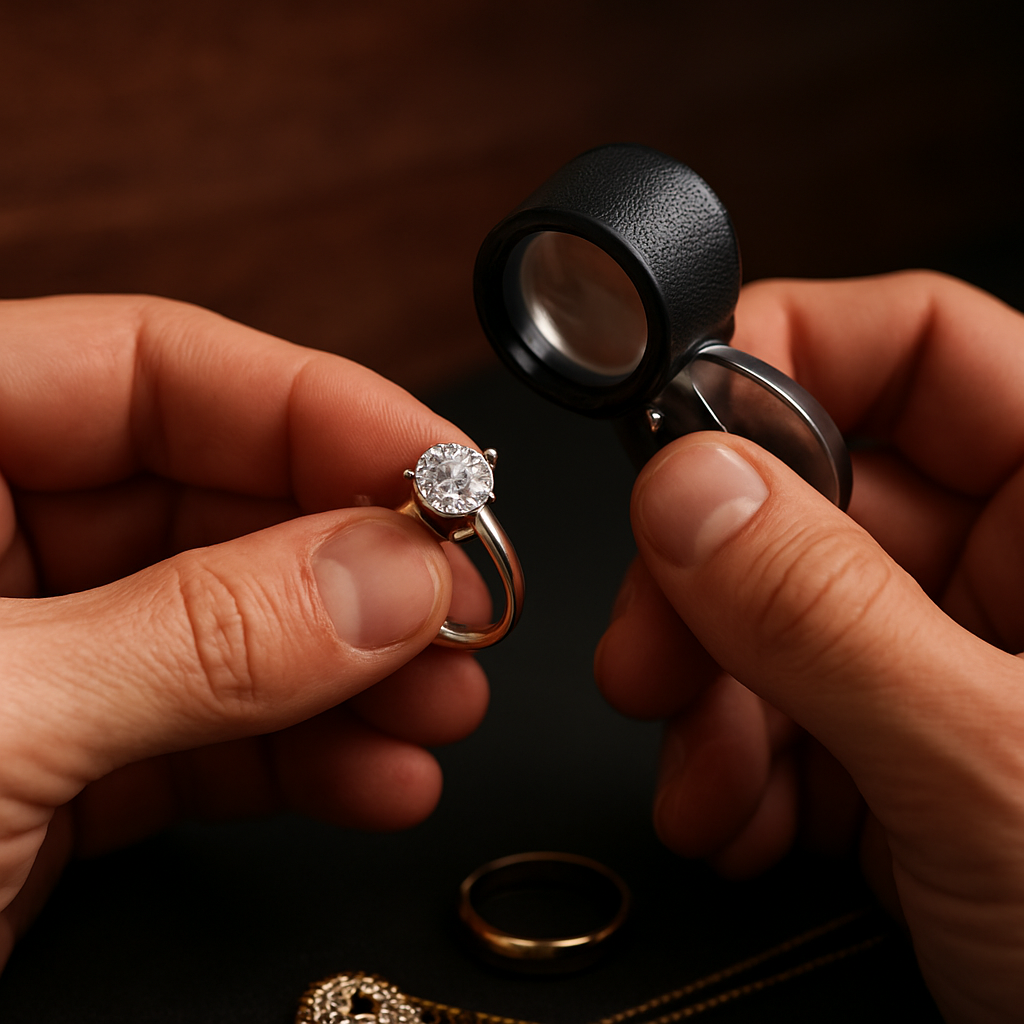
If you want a quick test in-store, ask to view the piece under magnification and request the name of the person or workshop that performed the finishing. If that information is vague, factor a maintenance discount into your offer or price expectation. To schedule an in-person inspection with equipment and experienced staff, book a visit at Bolsa Allen de oro y plata.
Takeaway: Prioritize secure mounting and quality finishing over feature lists; the best craftsmanship reduces future costs and preserves resale value.
Diamond and Gemstone Authentication Best Practices
Start with the paperwork, then validate it in person. A lab report is necessary but not sufficient; the real proof is matching the report to the stone and running the right tests for the metal and any treatments.
Core verification steps
- Confirm the report number online: Enter the serial on the issuing lab site such as GIA and compare carat, measurements, and plot to the stone you see.
- Match laser inscriptions when present: Many certified diamonds have a girdle inscription that should exactly match the report number; if you cannot see it under magnification, insist on verifying with the jeweler.
- Check the fields that move price: Verify cut grade, clarity plot, fluorescence, and exact measurements. These drive resale and insurance values more than the marketing label on the box.
- Ask about treatments and origin for colored gems: For sapphires, emeralds, and rubies request lab confirmation of heat treatment and, if origin matters, a specialist lab report from SSEF or GRS.
- Request non-destructive metal verification: For high value pieces insist on XRF testing to confirm platinum versus plated alloys before you buy or accept an offer when selling.
- Insist on written test results and a return window: Get test results documented and a short period to seek a second opinion if you are making a large purchase or trade.
Practical tradeoff: Full lab reports cost money and time. For accent stones and small melee the certificate expense often exceeds recoverable resale value. For any stone 0.5 carat or larger, for engagement rings, or when you plan to insure or finance, the certificate is worth the cost.
Limitation to accept: Not all labs apply the same standards. GIA and AGS are conservative; other labs may grade more liberally. That means identical looking stones can carry materially different offers depending on which report accompanies them.
Concrete example: A shopper arrived with an uncertified 1.3 carat round described as H VS2. Allen Gold and Silver Exchange verified the measurements, found no laser inscription, and offered a lower price than a similar GIA certified stone because of the added risk and liquidity discount. In another case a sapphire claimed to be untreated received a premium only after an SSEF style origin and treatment report confirmed low heat.
Next consideration: For local, in person certainty bring paperwork and schedule hands on verification. If you want an independent check or on site testing, start with the buy sell trade or diamantes pages to book an appointment for XRF and partner lab referrals.
Trust Signals and Policies That Differentiate Fine Jewelers
Practical trust beats polished sales copy every time. The policies a jeweler publishes and enforces — return windows, documented valuations, repair terms, and third-party verification practices — tell you whether they stand behind what they sell or are simply moving inventory.
What really signals reliability is paperwork you can use. Ask for an itemized valuation that ties each line to a test, certificate, or hallmark; ask how long the store will honor that valuation; and demand the identity of whoever performed the test or repair. Vague promises without names, dates, and signatures are worthless when you need proof later.
Policy elements that matter in practice
- Documented valuation: An appraisal or offer that lists tests performed (XRF, lab report number, inspection notes) and the person who issued it
- Clear returns and repairs terms: A written timeframe and scope for returns plus whether repairs are covered and at what cost
- Authentication and provenance requirements: Which labs the shop accepts (for example GIA or AGS) and how they verify watch serials or designer hallmarks
- Buyback/consignment terms: Whether buyback is a fixed percentage, time-limited, or evaluated at current market rates and how fees are disclosed
Tradeoff to accept: Stricter, documented policies reduce your risk but sometimes add friction. A shop that insists on lab verification for high-value stones will delay a sale, but that verification preserves liquidity and fetches better offers later. If you need immediate cash you may accept slightly lower, faster offers — but know you are trading trust for speed.
Practical judgment: Pay more attention to how a jeweler documents exceptions than to nice-sounding guarantees. Lifetime warranties are common, but many exclude everyday wear, stone loss, or require paid annual inspections. A short, specific guarantee with clear exclusions is preferable to a blanket lifetime claim with no write-up.
Real case: A customer traded a branded bracelet and received an itemized offer listing brand, model, condition notes, and a quoted payout valid for seven days. The shop photographed serial numbers and provided a signed offer letter. That documentation made it possible to accept a matched online offer three days later without dispute because the chain of custody and the condition assessment were already recorded.
Before you transact, insist the store put key points in writing: test results, return window, repair policy, and who performed the appraisal. If they refuse, factor a significant discount into any offer or walk away and use a shop that provides verifiable documentation such as Allen Gold and Silver Exchange buy sell trade or contact them to schedule an in-person appraisal at contact.
How to Evaluate a Fine Jeweler in Person: A Local Checklist for Allen Customers
Immediate impression matters. When you step into a shop, look beyond display cases: note whether staff invite you to inspect items under magnification, whether there is visible testing equipment on the counter, and whether the store offers a private appraisal area for higher-value transactions. These are practical readiness signals that separate businesses that transact high-value pieces regularly from casual resellers.
Staff competence shows up in how they explain trade-offs. A knowledgeable salesperson will explain why a GIA versus other lab report changes liquidity, why XRF testing matters for a platinum claim, and the service intervals for a mechanical watch. If answers are vague or evasive, the risk is not paperwork alone but how the shop will handle disputes after the sale.
In-store steps to follow
- Ask for live verification: Request to see the piece under a loupe or microscope and ask the staff to point out the hallmark, any laser inscription, and signs of previous repair while you watch.
- Request documented testing: If the item is high value, insist the shop run or show a recent XRF or lab verification and write the result on the offer. For diamonds ask them to pull up the lab report online using the report number, for example via GIA diamond quality.
- Demand a signed offer with an expiry: Get an itemized offer that lists condition notes, tests performed, and an expiration date. This prevents last-minute renegotiation and gives you time to seek a second opinion.
- Check provenance handling: For watches, ask to photograph serial numbers and confirm whether original boxes and service records were considered in the price. For branded pieces, provenance materially changes offers.
- Compare transaction types: Ask the shop to price the item for immediate cash, consignment, and buyback so you see the real tradeoff between speed and net proceeds.
- Inspect repair and warranty terms: Have the store explain what their repair warranty covers and what routine maintenance they recommend; note exclusions in writing.
- Gauge market knowledge: Ask how local demand in Allen affects resale timelines for the specific piece; correct answers reference recent comparable sales, not generic brand praise.
- Trust but verify: If anything is withheld or tests are not run, treat the offer as provisional and either walk or get independent verification.
Practical tradeoff to accept. Fast, in-person cash reduces risk of shipping and fraud but typically sacrifices 10 to 30 percent of the potential consignment upside for high-demand designer items or certified diamonds. Choose speed when you need immediate funds; choose consignment or a broker when maximizing proceeds matters.
Concrete example: A woman brought an inherited 1.1 carat diamond ring to Allen Gold and Silver Exchange. Staff verified the laser inscription, ran an XRF to confirm 18k gold, and provided a signed cash offer valid for five days. She used the window to get a second appraisal and ultimately accepted a higher consignment arrangement after confirming the GIA report matched the stone.
If you leave without written test results and an itemized offer, you left negotiating leverage and protection behind.
Real World Examples and Mini Case Studies
Real proof matters more than theory. These short case studies show how paperwork, condition, and seller choice change outcomes in predictable ways — not hypotheticals but transactions we see regularly at local shops like Bolsa Allen de oro y plata.
Case study 1: Buying a certified engagement ring
Situation: A buyer examines a 1.2 carat round brilliant with a GIA report. What changes the deal is the paperwork matching the stone and the setting condition. When the report number matched the laser inscription and XRF confirmed 18k gold, the seller priced the ring within a 10 to 15 percent premium over an uncertified, similar-looking stone because certified stones sell faster and insure more easily. The buyer negotiated a modest setting repair credit and left satisfied with both documentation and a short written return window.
Case study 2: Selling an inherited Rolex Submariner
Situation: A customer brought a 2006 Submariner with service receipts and the original box. Provenance moved the needle. Because the watch had documented service history and matching serials photographed at intake, offers were roughly 25 to 35 percent higher than identical-condition pieces lacking papers. When the bracelet showed stretched links, the offer reflected that repair cost rather than brand alone — even a Rolex loses value if condition requires immediate service.
Case study 3: Trading a designer bracelet for store credit
Situation: A David Yurman cable bracelet in good condition but without original receipt was offered for trade credit. Brand recognition helps, but execution and wear matter more. The store provided 40 to 55 percent of comparable retail as trade credit, higher than a straight cash buy because credit keeps sale in-house. Heavy surface scratches or missing end caps would have cut that credit by a third, so condition inspections were decisive.
| Scenario | Typical adjustment vs retail/insured value |
|---|---|
| Certified diamond with matching inscription and XRF-confirmed metal | +10% to +15% liquidity premium over uncertified equivalent |
| Luxury watch with box, papers, and recent service | +25% to +35% premium vs paperwork-free example |
| Designer bracelet traded for store credit (good condition) | 40% to 55% of retail as credit; cash buy lower |
Practical tradeoff to consider: Accepting store credit often yields a higher nominal number than cash, but the real value depends on what you will actually buy with that credit. If you do not plan to re-spend at the same shop, cash may be the better route despite a lower headline offer.
Tactical step: Photograph serials, keep original boxes and receipts, and verify lab report numbers online at GIA before you visit. Those steps translate directly into stronger offers and fewer surprises.
How Allen Gold and Silver Exchange Demonstrates Quality, Craftsmanship, and Trust
Direct evidence of quality: Allen Gold and Silver Exchange shows its standards through repeatable, observable steps — visible XRF testing at the counter, magnified inspections in front of the customer, and signed itemized offers that list tests performed. Those are not marketing lines; they are actions you can watch and keep. If a store refuses to run or document basic verifications, you are buying opacity, not jewelry.
Practical limitation and tradeoff: In-house testing covers metals and common diamond checks, but specialist work like origin reports for rare sapphires or full lab grading for high-value colored gems requires an external lab and time. Expect a provisional offer up front and a final price after lab confirmation; that delay costs patience but protects you from price erosion caused by later surprises.
What they do, in plain terms
Allen uses a combination of hands-on inspection and documented verification so customers can both see and keep the proof. They are practical about when to escalate items to third-party labs and when to complete a local transaction.
- On-site XRF and loupe inspection: immediate metal confirmation and visible hallmarks
- Signed offers with test notes: a timestamped paper trail you can use for comparison or to obtain a second opinion
- Luxury watch intake: photographing serials, checking service history, and noting stretch or repairs that affect value
- Partner lab referrals: when a stone or provenance needs an SSEF/AGS/GIA-style specialist report rather than an in-store check
- Cleaning, basic repair, and laser welding: common maintenance performed locally so pieces leave the store ready to wear or consign
Concrete example: A client brought a loose 2.3 carat sapphire without provenance. Allen documented condition, provided a provisional cash offer, then sent the stone to a specialist lab on the client’s approval. When the lab confirmed low-heat treatment and origin, the final offer adjusted upward and the client accepted consignment rather than immediate cash — a better net outcome than accepting a steep liquidity discount.
Judgment you should trust: Physical stores that insist on written notes and visible testing almost always deliver better, disputable outcomes than sellers who promise high prices without documentation. Quick highball offers often hide downstream deductions for condition, unseen treatments, or missing provenance. If your priority is maximum net, accept the verification time; if speed is critical, take a documented cash offer and understand the price tradeoff.
Next consideration: schedule a hands-on appraisal so you can see these steps in action and get a signed, itemized offer — start at the buy sell trade page or book via contact.



 Español
 English
 Español de Colombia
 Español de México
 简体中文
 Tagalog
 Tiếng Việt
 العربية
 Français
 한국어
 Русский
 Português do Brasil
 हिन्दी
 Deutsch
 Polski